Wednesday, May 25, 2016

Is Microsoft finished making Windows phones?

Microsoft is radically changing its mobile strategy, and not in a very positive way. The company has said it's making 1,850 smartphone-related jobs redundant, "scaling back" its involvement in mobile hardware, and according to one rumor ceasing to design and manufacture mobile phones entirely.

The 1,850 job cuts are coming soon, and 1,350 of them will be in Finland at Microsoft Mobile. This will result in an impairment charge of $950 million, including $200 million in severance pay. In an email to employees sent early Wednesday morning, Microsoft's VP of Windows and Devices, Terry Myerson, talks about "streamlining the smartphone hardware business," and "scaling back," but adds that the company isn't out of the phone business — it's just adopting a more pragmatic approach.

Related: Why you absolutely shouldn't even consider buying a Windows Phone

"I used the words 'be more focused' above. This in fact describes what we are doing (we're scaling back, but we're not out!), but at the same time I don't love it because it lacks the emotional impact of this decision. When I look back on our journey in mobility, we've done hard work and had great ideas, but have not always had the alignment needed across the company to make an impact," he wrote.

Being more pragmatic and focused means concentrating on universal apps for Windows, and building apps for other mobile platforms, all based around Microsoft's own tools. "Regardless of a person's phone choice, we want everyone to be able to experience what Microsoft has to offer them," Myerson said. He also promises to support current Lumia smartphones, and to release updates, plus to "develop great new devices."

The wording on hardware is noncommittal. Is Microsoft in or out? According to an unnamed source speaking to the Helsingin Sanomat newspaper, and initially reported by Reuters, Microsoft will stop designing and manufacturing smartphones completely. The news was apparently shared during a special Microsoft-organized meeting in Espoo, Finland with local developers. Reuters has since amended its report with a comment from a Finnish union representative, saying the job cuts "essentially put an end to Microsoft's development of new phones."

Recent actions also point to Microsoft being finished with smartphones, at least for consumers. The latest cuts come less than a year after Microsoft slashed 7,800 jobs, most of which were related to phones, and initiated a restructuring of the mobile division to concentrate mostly on business customers. This month it sold off Nokia's feature phone business, which it obtained with the original Nokia deal in 2014, for $350 million to HMD Group. Mobile hardware was barely mentioned during its Build developer conference in April, and according to the most recent analyst data, Windows Phone's global market share dropped below 1 percent at the beginning of 2016.

While Windows Phones such as the Lumia 950 and 950XL are still on sale, it looks like they may be the last consumer-focused devices of their type we'll see from Microsoft for now. What does this mean for the long-rumored Surface Phone? Like Microsoft's phone strategy in general, its future — if it even has one — is very uncertain.


Source: Is Microsoft finished making Windows phones?

Tuesday, May 24, 2016

Moto X 2016 Release Soon As Current Models Offered In Discount

Moto X 2016 release is likely to happen soon as Moto X Pure phones are spotted with a discount offer.

According to Yibada, Moto X Pure phones are available for $299 on Amazon. The phone is listed under Prime Shipping category. So, you can expect quick delivery and there are no charges on shipping.

According to Christian Times, Moto X 2016 will be having the name Moto Z. Since Motorola has not confirmed anything, take this news with a pinch of salt. It's also reported that there will be major changes in the design of the upcoming Moto X series phones.

Moto X 2016 will have two variants. Among them, one will be having an ordinary design and low price tag whereas the other one is expected to be a high-end device and high-end specs. These two variants will have the codenames  Vertex and Vector respectively. Moto X 2016 Vector will feature a very thin 5.2mm body. The phone will sport a 5.5-inch Quad HD screen. It will be fueled by a 2GHz Snapdragon 820. A 4GB of RAM with 32GB internal storage, a 13MP rear camera with OIS are the other features.  

The Vertex model will have a thick body, according to Mobipicker. The same source claims that Moto X Vertex will pack a 5.5? Full HD screen, larger battery, 2GB/3GB RAM, 16GB storage, Snapdragon 625, and 16MP rear camera without OIS. Moto X phones may feature a Heat Pipe. This Heat Pipe can resolve heating issues.

The phone was expected at the Mobile World Congress (MWC) which took place in February, which did not happen. Gotta Be Mobile says, the previous Moto X phone arrived in September. Motorola usually prefers September for the launch. Lenovo Tech World will take place on June 9. There is also  a possibility of  launching Moto X 2016 at the same event. Let us wait and watch!


Source: Moto X 2016 Release Soon As Current Models Offered In Discount

Buy One of Our Popular Smartphones, Get One Free

Its specs appear to be similar to the regular Galaxy S7, except that it will pack a larger 4,000mAh battery and also protective features like drop, water, and dust resistance.

You will notice an nearly similar design between Samsung Galaxy S7 Active and last year's Galaxy S6 Active. The reports started doing rounds on the internet after a Dutch publication, Galaxy Club, revealed that the company has filed for two trademarks, Samsung Iris, and Samsung Eyeprint. But like the Galaxy S7, the S7 Active benefits from a so-called dual pixel sensor that improves low-light image capture.

If you haven't been keeping up with Samsung rumors, there have been a handful of leaks these past few weeks pointing toward the strong likelihood we'll be seeing the release of a special ruggedized version of the Galaxy S7 dubbed the Samsung Galaxy S7 Active.

A9 Pro also has a 5,000mAh battery, which is one of the strongest aspects of the smartphone from a hardware perspective. Sammy just revamped their Galaxy S lineup past year, so while it's unlikely we'll see a dramatic change, you just never know. This is the same size used on last year's Galaxy S6 Active as well as the new Galaxy S7.

By now, we've seen enough bits of evidence to be fairly confident that the Samsung Galaxy S7 Active is a real device. The camera isen't quite S7 level with a 12-megapixel rear shooter rather than the S7's 16-megapixel offering.

New Galaxy Tab A with Android Marshmallow will have a bunch of new features including Google Now in Tap, Doze, and others. This incremental upgrade drew initial scepticism, but the S7 phones have beaten expectations and could set a new first-year sales record for the South Korean firm. Furthermore, to mark the occasion, Samsung also introduced LINE Friends-themed watch faces for the Samsung Gear S2 smartwatch, which can be downloaded from the Galaxy Apps store. The expansion slot helps bump up the 32GB of onboard storage by up to 200GB.

So far, Samsung has kept the release of their flagship Galaxy Note 6 under wraps and the tech enthusiasts are clueless about its release or what to expect from the phone.


Source: Buy One of Our Popular Smartphones, Get One Free

Monday, May 23, 2016

Project Ara, Google's modular smartphone, slated for release in 2017

Project Ara, Google's modular smartphone, slated for release in 2017

The company has announced that their modular phone Project Ara would be available to developers later this fall.

Ara Knaian of Armenian origin is a chief mechanic engineer and co-founder of Project Ara, after whom it is named.

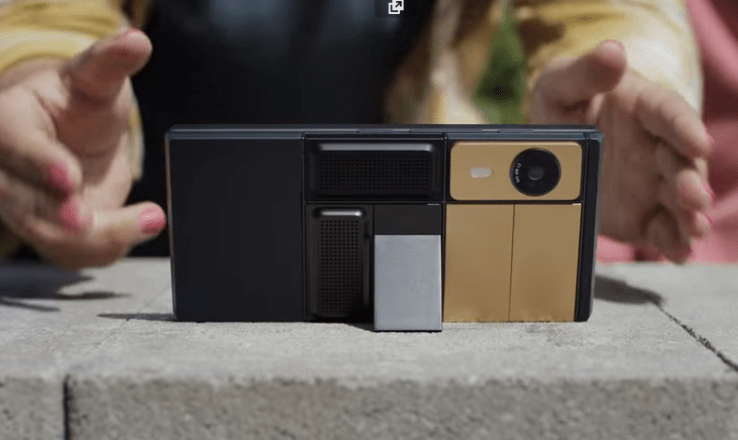
Project Ara is Google's vision for the future of smartphones. Once modular phones are released, users will be able to invest in a device that they want in the first place. Earlier, the modular phone allowed you to swap and lock-in nearly everything into the frame-as they call it- be it the display, processor, speaker, camera, RAM and more. The consumer version has received yet another delay, however, this time to 2017. Soli is a radar-based hand gesture tracker, which allows a person to control a wearable device through hand gestures without touching it. HARMAN is working with ATAP for developing speakers that come with a built in Soli radar. With an Ara phone, you could simply swap in a glucometer module and not worry about compromising performance of your device. The frame packs in all the functionality of a high-end smartphone and contains six flexible spots to swap in the modules.

A modular phone could, in theory, make it much cheaper for companies to create phone components and so introduce a degree of innovation not now possible.

Manchester City to sign Ilkay Gundogan this week?A City insider said: "To finish so far behind Leicester, having made such a huge investment in the squad, was unacceptable". The insider added: "Manuel has been able to use the confirmation that Pep Guardiola was coming to the club as an excuse".

Last Wednesday at I/O, Google unveiled its response to the Amazon Echo wireless speaker, updates to its Android Wear OS and its Daydream VR platform, which includes the VR-optimized Android N smartphone OS due in the summer. You can put any hardware module in any slot as they are all generic.

But Google has pulled the surprise out of the box, and it's that modular phone concept is up and running at high volume.

Blaise Bertrand, the head of creative at Google's Advanced Technology and Projects group, says there'll be a "thin, light, beautiful" device available to consumers next year (via Engadget). But if that's a little too involved for you, you can use the "OK Google" command to eject a module.

The ATAP team now has a prototype for the modular smartphone.


Source: Project Ara, Google's modular smartphone, slated for release in 2017

The crazy dream of modular smartphones

File it under 'it seemed great on paper'… but Google's project Ara modular smartphone concept is — for all intents and purposes — dead.

If you want to be a little more generous, you can say Google has pivoted away from attempting to engineer the impossible — i.e. total smartphone modularity — to strip it back to a few swappable units that will not include core phone components.

And that's assuming its latest prototype ever makes it to market, as none of its Ara predecessors have.

The prototype Google was showing off at I/O last week, now pledging a 2017 commercial release for a modular phone it's been working to bring to market since at least 2013, will apparently have six spaces on the back for swappable modules.

A camera, a speaker and an e-ink display are some of the early ideas for modules that Google is talking about, although it says it intends to open this up to let third parties build stuff.

The head of creative and marketing for the ATAP skunkworks lab, which the project falls under at Google/Alphabet, anticipates hardware hackers building "crazy stuff" to squeeze into Ara's sockets.

And crazy is the word because modularity is necessarily a minority passion. The mainstream isn't half so keen on needing to physically configure their high tech kit before they can use it as they wish (vs the geek fraternity voluntarily spending all their spare hours doing exactly that).

Even lead Ara engineer, Rafa Camargo, confessed as much himself in an interview with CNET. "When we did our user studies, what we found is that most users don't care about modularizing the core functions. They expect them all to be there, to always work, and to be consistent," he said.

Key phrases there: 'Always work'. 'Be consistent'.

In other words, the exact opposite of modularity.

And still Google pushes Ara.

The new party trick for Ara shown off on stage at I/O is a voice command that lets the user eject a swappable camera module by saying 'Ok Google eject the camera' — garnering much applause from the developer crowd at the event.

But Google using a publicity-prone yet impractical non-commercial gizmo to showcase another, far more core piece of its tech (voice-based interfaces) is standard playbook for such a savvy marketing entity. (StreetView cameras strapped to hikers anyone?)

And perhaps explains why Ara has gone the distance at Google yet never shipped.

The dream of the modular smartphone yielding completely customizable consumer handsets always seems far more enticing than the reality of demanding, prone to falling apart prototypes. But if the engineering challenge is hideous, the consumer reality is even more unappealing. Fiddly bits of phone that get misplaced or lost down the back of the sofa… Er, tell me again why it's a good idea to make a smartphone more complicated to use?

And why, as a consumer, would you want your smartphone to not have a decent camera/audio performance in the first place? That's the great conjuring conceal of Ara-style modularity — 'buy this not very good device, and then pay more to make it a bit better!'

When it comes to adding extra functionality via modules, i.e. not just improving an existing set of core phone features, then the promise is to support niche use-cases — say by adding an environmental sensor module — which is necessarily of minority, not mass, appeal.

And why do you need a sensor to be plugged into the back of the phone anyway? The huge spectrum of extant Bluetooth IoT add-ons that link to a mobile or tablet without needing to be physically plugged into that device makes Ara's promise of plug-and-play sensor modules at best incrementally interesting.

The e-ink screen module is perhaps the most compelling idea here IMO. But Yota Devices has been attempting to drive interest in dual-display e-ink smartphones for years. Cool? Absolutely. Mainstream appeal? Absolutely not.

Ok then, what about affordability? At one point Google was talking about the base Ara hardware being $50, which sounded surprisingly cheap (at the time). Albeit you'd still need to factor in module costs…

At first glance, modularity might look like an interesting avenue to explore if making phones more affordable is your key driver — as a way to expand the range of features in a low cost basic device by enabling the buyer to spread the cost with modular add-ons.

But given the engineering complexity of building a robust base for modules to plug into and play nicely with, and the fact Google is not specifying how much add-on modules will cost at this point, 'huge affordability' is not really looking like it's in Ara's box of add-on tricks.

At the same time, low cost smartphones continue to become more capable as higher end specs and features are squeezed further down the price continuum by a hyper competitive, face-paced smartphone market. So modularity looks like a very slow, sub-par 'solution' — if solution it be — to affordability.

The original inspiration behind Ara was in fact another concept called Phonebloks — which was motivated by a recycling/reuse agenda, with a stated aim of wanting to 'change the way electronics are made in order to create less waste'. Which is certainly a whole lot more interesting as an idea. But it is not, apparently, the direction Google is pushing Ara in.

Au contraire Ara's slimmed down modularity now appears aimed at creating more electronic stuff per person/smartphone, by selling a pick 'n' mix of additional hardware bits and thereby encouraging an expanding of the electronics-plus-plastics pie.

And if Google is thinking that custom add-ons could be a way to spin out the lifespan of a single smartphone, by encouraging people to hold onto a handset for longer and thereby decrease total upgrade wastage over the longer term, well it's not making a big song and dance about that being its mission as yet. So we'll have to wait and see.

Meanwhile, a very different company has (quietly) made that sort of modularity a reality. Step forward Fairphone whose Fairphone 2 Android smartphone, which you can buy today (for €525), is "designed for repairability" — with a series of modules that can be swapped out when you need a new processor, say, or display. The spare parts (aka swappable modules) are sold in its online shop…

Surely this more practical, less flashy 'modularity for sustainability' is something Google could have pushed for with Ara. And could have played a leadership role in encouraging Android OEMs to look towards the circular economy for their next-gen product inspiration.

Instead it went down (and remains within) a modular rabbit hole, producing a series of fantastical prototype demos and concept videos along the way which have really only been feeding its own publicity agenda at this point…  'Oh look at the cute/crazy stuff Google is making now!' etc etc.

It is true Mountain View is not the only company dabbling with consumer modularity in smartphones. Back in February LG unveiled a smartphone with a swappable nodule on its bottom end. To less than great reviews. And no obvious tsunami of consumer interest. Even so LG clearly thought it worth a punt bringing a modularity-lite concept to market.

But then to stand out in the fiercely competitive smartphone market Android OEMs are having to pull out all the stops — including, apparently, offering consumers the choice to pull off and swap out the rump of their phone. File that one under 'fiddly gimmick'.

Of course Google has even more incentive than LG to keep Android feeling fresh and funky, given the platform is the dominant smartphone OS by a huge margin — and Google obviously wants to keep it that way. So you could say there's an element of 'sustainability' in its modular thinking with project Ara. But just a more self-serving kind that aims to keep developers enthused and perceptions tickled.

So if/when Ara ships 'some time' in 2017, as it's now billed to, even though the phone will in all likelihood sell only in tiny quantities to niche, enthusiast buyers, the project will have done its bit for its parent entity by feeding the company's wider brand narrative for multiple years. And that's a mission Google/Alphabet is of course 100% committed to.


Source: The crazy dream of modular smartphones

Sunday, May 22, 2016

HTC Android N Update Release Details

Rumoured products Google may also announce new Android TV devices at the show courtesy of Xiaomi. — EPA

At the I/O conference held on Wednesday Google revealed the new improvements that they are bringing about in their Android N. The Android N Developer Preview 3 includes some of the new changes. ZDNet has the announcements from the keynote by the numbers to show you what the company plans.

Android N is coming later this year and it will introduce some pretty interesting new features.

But this version of Android is also good enough to handle features that are typically left to the auto manufacturer.

It means that Android Auto devices can be given instructions using the key phrase "OK Google" that has been an integral part of Google Now and Google Voice Search.

The announcement of the Android Wear 2.0 version by Google underscores an evident effort by the company to ensure that its presently-struggling Android Wear platform gains the traction of some of the other smartwatch platforms.

With the Android N OS, the Android device is truly yours! So if you must have it, you'll have to buy a new Nexus smartphone this summer, or a device that comes with Android N preinstalled later this year. How the feature is designed, for seamless updates to work on existing smartphones and tablets, some serious modifications would need to be performed beforehand.

Google is too soft on app developers that don't implement certain features.

According to PC Advisor, not only is the Nexux 7 2016's release date unclear, but it is also sketchy if Google is even actually set to release such model. Users can have a chance to test-drive some apps without even installing them first to their Android smartphones.

Big Android updates are infamous for taking an age before actually making it to intended devices.

The report further explained that the new feature requires the device to be repartitioned and this is something that the everyday user would not be able to do. It seems that Google has been listening to the concerns addressed by Android users. Until now, the "OEM" tab had no other function than providing an exit out to the standard infotainment interface of the vehicle. This will result to improved graphics and more efficient performance for mobile devices.


Source: HTC Android N Update Release Details

Microsoft Surface Phone Rumor Roundup: Possible Release Date, Specs And More

Surface Phone concept render

Microsoft Surface Phone rumors have been thrown around quite a lot, and the company seems to be focusing its energy to delivering the much expected smartphone.

We compiled what information is available about the high-end device, so if you are curious about the development of the Surface Phone, read on.

A previous rumor hinted that the handset will land during the second half of this year, but more recent information pushes the timetable to the beginning of 2017. While this could be a downer for some Microsoft enthusiasts, the good news is that the company aims to launch not one, but three different models of the Surface Phone.

Insiders familiar with the matter point out that Panos Panay and his Surface team are on top of developing the Microsoft Surface Phone.

Design And Build

As far as we know the Surface Phone will be an all metal build. Should the upcoming device take a page out of the Surface Tablet's design, we should see a solid build in the smartphone.

Kickstand

Rumors hinted that the Surface Tablet team will borrow the Kickstand concept and implement it on the Surface Phone, as well. The only thing missing from the productivity kit is a stylus, but we just have to wait and see if that is also in tow.

Display

The three purported models of Surface Phone could sport different display sizes.

Times of India notes that the consumer variant will feature a 5.5-inch screen, while the business oriented devices should get close to 6-inch displays. This should make it easier for power users to engage in multitasking activities.

Processor And Power Specs

Previous rumors noted that Microsoft aimed to have Intel's Atom processors on board the Surface Phone. However, Intel announced that it's ceasing the manufacturing process for the Atom CPU, which could lead to important ramifications for Microsoft's plans.

Christian Daily reports that the Surface Phone will use Intel's 14nm Kaby Lake processor for processing power.

The consumer sector variant should pack 4 GB of RAM and 64 GB of default space, while the enterprise-targeted model is rumored to pack 6 GB of RAM and a hefty 128 GB of storage. The third Surface Phone will be a beastly device that directly rivals some PCs reportedly coming with Qualcomm's Snapdragon 830 sporting 8 GB of RAM and 512 GB internal storage.

Camera

The camera combo will pair a mighty 21-megapixel main camera with a powerful 8-megapixel selfie camera. Insiders affirm that features for the camera will differ among the three models, while the 3,000 mAh battery will be a common trait.

Software

It is a no-brainer that the Surface Phone will try to make the most out of the Windows 10 OS mobile ecosystem. We are looking forward to seeing the Surface Phone operating Windows 10 for Mobile out of the box. There is a strong chance that the business model and the flagship killer will bring pro installment options, such as additional software for productivity and advanced mobile management.

Release Date

The Surface Phone was supposed to be released during May 2016. The company changed its mind after the Lumia 950 flopped, so now we are looking towards a Surface Phone launch at the beginning of 2017.

Another reason for the delay could reside in the OEM waiting out for Intel to start working on its Kaby Lake processors. As the new series of chipsets is set to begin early 2017, this lines up perfectly with the release of the Surface Phone. Rumors say this is why the Surface Book 2's release was pushed back, as well.

Price

We expect the three Surface Phones to come with spicy price tags due to the great cocktail of performance and technical specs.

The team behind the successful Surface tablet took the reins for the upcoming handsets, which means that the smartphone will follow in the footsteps of the 2-in-1 slate. What is more, sources from inside the company mention that the Surface Phone will be the most secure mobile device available.

Take this with a grain of salt, but we heard that the price range of Surface Phone models will vary between $700 and $1,200.

Are you excited about the upcoming Surface Phones? Let us know in the comments section below.

© 2016 Tech Times, All rights reserved. Do not reproduce without permission.


Source: Microsoft Surface Phone Rumor Roundup: Possible Release Date, Specs And More