Sunday, October 8, 2017

Why Microsoft Bid Sayonara To Windows Phones And Windows 10 Mobile

HP's announcement that it is discontinuing its Elite x3 Windows 10 Mobile phone further confirmed that Microsoft completely shelved its smartphone ambition.

Nadella himself admitted in his book that he was against Microsoft's purchase of Nokia's old phone business. He wrote off the entire $7.6 billion acquisition.

Nadella never believed that Windows phones can catch up with Android and iOS. Don't expect a Surface phone to be released as long as Nadella is in charge.

My fearless forecast now is that Microsoft will soon discontinue support for Windows 10 Mobile. Microsoft ended support for Windows Phone 8.1 last July.

Shelving Windows 10 Mobile completes a cathartic release for Microsoft from its misadventure in mobile phones.

Microsoft (NASDAQ:MSFT) is being quiet, but it is ready to say sayonara to Windows 10 Mobile. It already ended support for Window Phone 8.1 last July. Getting rid of Windows 10 Mobile should complete the detoxification of Microsoft's failure in mobile. HP, Inc. (NYSE:HPQ) recently announced that it will discontinue its Elite x3 Windows 10 Mobile smartphone.

An unidentified HP executive explained that "Microsoft, as all companies do, decided on a change in strategy and so they are less focused on what they thought they would be focused on today."
(Source: Microsoft)

We did not get the memo but Microsoft made it clear to its OEM partners that Windows 10 Mobile is a walking dead. Microsoft already ended support for Windows Phone 8.1 last July. The culling will continue until Windows 10 Mobile eventually joins the graveyard where Zune and Windows RT were laid to rest.

Nadella's book also revealed he was against Ballmer's idea of buying Nokia's (NYSE:NOK) old phone business. It explained why Nadella ended up writing off the $7.6 billion Lumia phone business that Ballmer acquired. His heart and mind were never for Windows smartphones. He is determined to extricate Microsoft out of its misery in Windows phones.

We can expect that there will never be another phone from Microsoft as long as Nadella is in charge. Consequently, there will be no eulogies, but Windows 10 Mobile's days are numbered. Sooner than later, Microsoft will completely divorce itself from Windows 10 Mobile like it did with its phone hardware business.

There's no point developing/maintaining a mobile operating system when Microsoft has thrown the towel on Windows phones.

The only consolation is that Microsoft got a $1.8 billion tax write-down from Ballmer's ill-fated bet on Windows phones. Windows 10 Mobile also taught us that software developers did not like Microsoft's Universal Windows Platform.

Why Letting Windows 10 Mobile Die Is Cathartic For Microsoft

Raising the white flag and accepting defeat is an act of courage. Accepting the reality that Android and iOS reign supreme on mobile is a back to the future move from Nadella. It allows Microsoft to better adapt to the reality that Android OS devices now outnumber Windows computers/devices.

Without the excess baggage of Lumia and Windows 10 Mobile, Nadella can focus more on his device-agnostic strategy in disseminating Microsoft's software products and services. The prosperity of Microsoft now depends on how effective it can attract (and retain) business and personal users of Android/iOS/MacOS devices to buy/subscribe to Office 365, Skype, OneDrive, and Azure.

Microsoft tried and failed to compete against iPhones. However, its Cellular PC concept which enables Surface hybrid laptops to make phone calls should help it continue disrupting Mac sales.

Cloud Computing, Not Smartphone Computing

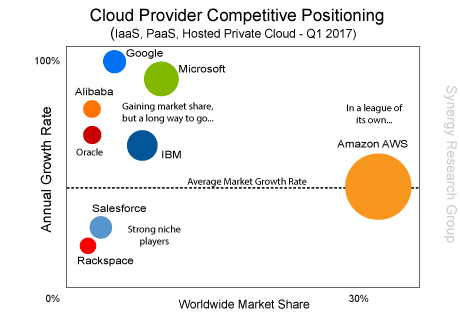
A complete retreat from Windows phones and Windows 10 Mobile will let Microsoft focus more on competing better against Amazon (AMZN) Web Services. Microsoft is the clear leader in SaaS (Software-as-a-Service). However, Azure is still a far-second to Amazon when it comes to cloud computing infrastructure services.

The savings from killing the Lumia phone business and Windows 10 Mobile can go to improving Azure.
(Source: Synergy Research)

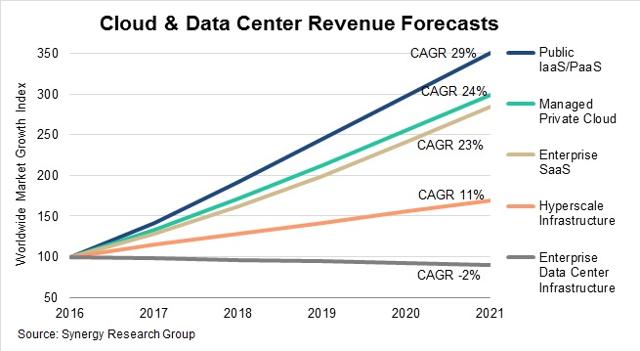
Abandoning Windows phones gives Microsoft more leeway to create new cloud computing services like its Coco Framework Enterprise Blockchain-as-a-Service. A stronger focus on cloud computing is very important for Microsoft. Synergy Research predicted last July that global revenue from cloud computing and SaaS will have a CAGR of 23-29% for the next five years. It will reach $200 billion by 2020.

Public IaaS/PaaS, where Amazon Web Services is the runaway leader (with 34% market share), is going to have the fastest CAGR at 29%.
Conclusion

MSFT already touts an YTD gain of +21.40%, but I still rate it as a buy. My takeaway is that Nadella is weaning Microsoft away from its dependency on the Windows ecosystem. A Microsoft that can flourish without its dominant Windows operating system becomes a more resilient company.
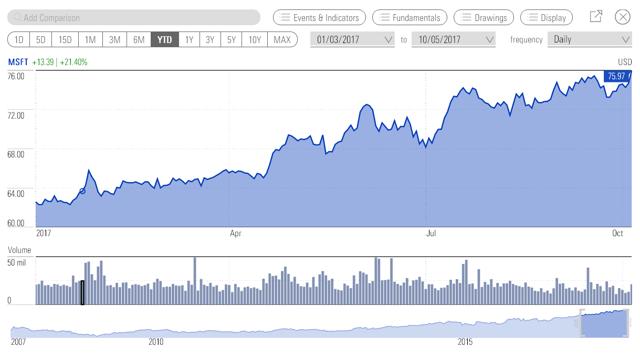
(Source: Morningstar)

Microsoft doesn't need its own mobile operating system, mobile app store, and its own brand of phones to benefit from the rise in smartphone usage.

Microsoft's software products and services are now device agnostic and platform independent. Many Android/iOS device users will still be captured customers of Office 365. Let us also never forget that Microsoft will continue to reap patent licensing fees from Android device manufacturers.

The coming demise of Windows 10 Mobile is therefore just another painful lesson that made Microsoft smarter and stronger.

Disclosure: I am/we are long MSFT, AMZN, HPQ, NOK.

I wrote this article myself, and it expresses my own opinions. I am not receiving compensation for it (other than from Seeking Alpha). I have no business relationship with any company whose stock is mentioned in this article.


Source: Why Microsoft Bid Sayonara To Windows Phones And Windows 10 Mobile

Saturday, October 7, 2017

Did Apple Just Overtake Google in Smartphone AI?

For several years, Alphabet Inc. (NASDAQ:GOOGL) (NASDAQ:GOOG) has been one of the acknowledged leaders in artificial intelligence (AI). Its Google Brain project was pioneering work in deep learning, a subdiscipline of AI that builds software models inspired by the structure and function of the human brain and how it sorts and processes data. Called neural networks, these models mimic the inner workings of neurons and synapses, and allow these systems to learn in much the same way as humans.

Their ability to excel at pattern recognition has led to such breakthroughs as the voice recognition employed by digital assistants and smart speakers, the image recognition that tags friends in photos, and language translation services found on Google search, and forms the foundations for self-driving cars.

Apple Inc. (NASDAQ:AAPL), was hailed for the initial promise of its Siri voice-activated digital assistant, but seemed to languish as the AI that powered Siri's responses was overshadowed by more impressive advances from the Google AI camp. To its credit, Apple said its primary focus was on user privacy, which may have initially hampered its efforts. With the release of Apple's latest flagship iPhone, however, it may finally have overtaken its rival in smartphone AI.

iPhone X with water splashing around screen.

The iPhone X has leading-edge technology under the hood. Image source: Apple.

AI pioneer

Google's work on the Google Brain project in 2012 showed one of the earliest concrete examples of the potential for AI when its system was fed 10 million randomly selected images from YouTube and was able to correctly identify cats. Its purchase of deep learning start-up DeepMind in 2014 solidified its lead in the space. DeepMind's AlphaGo computer was able to achieve what many thought impossible just a few short years ago, defeating the reigning world champion in the ancient and highly sophisticated Chinese game of Go.

With the recent release of its latest iPhone models, Apple appears to have surpassed Google in the crucial area of "at-the-edge" AI computing.

Apple's leading edge

Most AI systems reside on the cloud, as they require large amounts of data and processing power to do their best work. The more they are used, the smarter these systems become due to the ability to continuously hone and improve their learning. By comparison, cutting-edge AI computing happens on the devices themselves, as is the case with Apple's iPhone 8 and X.

In a research report from DigiTimes, analysts Ashley Huang and Luke Lin posit that Apple has taken the lead in the at-the-edge or "on-device" category. With the addition of the A11 Bionic chip, which Apple calls "the most powerful and smartest chip ever in a smartphone," the company has brought AI capabilities to the iPhone itself, foregoing the cloud. The analysts point out that:

The built-in dual-core neural engine chip incorporated within the A11 processors, which power the iPhone X and iPhone 8 devices, integrates functionality such as machine learning, inference model and related algorithm to perform as an application-specific integrated circuit (ASIC) chip for image recognition and achieve hardware acceleration. 

iPhone X users will experience the onboard AI with Face ID, Apple's cutting-edge facial recognition that uses 33,000 infrared dots to create a mathematical model of your face to "recognize" you and unlock your device. It can adapt to a gradually changing physical appearance over time. The data is stored in a secure enclave on the phone, and the processing that is done on the device is designed to protect user data. The neural engine on the A11 Bionic chip also improves the camera function and creates powerful augmented reality capabilities and immersive 3D games. 

Fast paced and ever changing

Apple has long insisted on the importance of user privacy, and by bringing its AI capabilities to the device, it has accomplished this to a greater degree, while also bringing a level of technological innovation that others have yet to achieve.

It is important to note that breakthroughs in AI technology are happening almost daily, and while Apple may have the lead, for now. But it can't afford to rest on its laurels for long -- Google and others will be looking to take back the lead from the iPhone maker. For the moment, though it can bask in the limelight.

Suzanne Frey, an executive at Alphabet, is a member of The Motley Fool's board of directors. Danny Vena owns shares of Alphabet (A shares) and Apple. The Motley Fool owns shares of and recommends Alphabet (A shares), Alphabet (C shares), and Apple. The Motley Fool has the following options: long January 2020 $150 calls on Apple and short January 2020 $155 calls on Apple. The Motley Fool has a disclosure policy.


Source: Did Apple Just Overtake Google in Smartphone AI?

Friday, October 6, 2017

Samsung Galaxy X Foldable Phone Rumors: Limited Edition Smartphone that May Release Only in South Korea

Samsung is rumored to be working on a foldable smartphone called Galaxy X. The handset has been certified by Bluetooth SIG as well as National Radio Agency from South Korea. These certifications have revealed that the Galaxy X has a model number of SM-G888N0. Fresh information suggest that it could be a limited phone as the South Korean company is speculated to manufacture only 10,000 units.

If the Galaxy X is a limited edition, it may not receive a worldwide release and may be only made available in the home country of South Korea. In 2014, the Galaxy Note Edge that features a single edge curved display was only launched in South Korea and India. Hence, the first Galaxy X could be a test device because of which it may be available in limited edition in South Korea. There is a possibility it may receive a global launch in 2019.

Samsung Galaxy Foldable Smartphone Prototype

Read More: Samsung Galaxy Note 8 Records Highest Score of 94 on DxOMark

Interestingly, Samsung has confirmed in the previous month that if it is able to overcome the technical glitches, it may launch a foldable Galaxy Note in 2018. However, there is no confirmation that this smartphone will launch as Galaxy X.

According to Forbes, Samsung may showcase the Galaxy X foldable phone at the Consumer Electronics Show (CES) that will be held between Jan. 9 to Jan. 12 in January 2018. The company is unlikely to launch the Galaxy X at Mobile World Congress (MWC) that is usually held in February. The reason behind it is that Samsung is known for launching its new S-series flagship just before MWC.

Next year's MWC 2018 will be held between Feb. 26 and March 1. Hence, the South Korean company is expected to debut the Galaxy S9 and Galaxy S9+ on Feb. 25. There is a possibility that the Galaxy X may get unveiled alongside the Galaxy Note 9 in August next year or during the IFA 2018 that will be held in between Aug. 31 to Sept. 5.

The Galaxy X is expected to arrive with flagship specification and it goes without saying that its foldable design will be its USP.  The South Korean company will not want the Galaxy X to cannibalize the sales of its next generation Galaxy S and Galaxy Note series smartphones.

When do you think will Samsung release the Galaxy X foldable phone next year? Share us your thoughts by posting your comments below.

(source)


Source: Samsung Galaxy X Foldable Phone Rumors: Limited Edition Smartphone that May Release Only in South Korea

Thursday, October 5, 2017

The Best iPhone X Cases Ahead of the Smartphone's Nov. 3 Release

Everything You Needfor a Great New School Year

Smart Home DevicesThat Will Make Your Home Feel Futuristic

Awesome iPhone 7 CasesFor Every Type of Person

Fitness GearFor iPhone Owners Who Want to Get in Shape

Great GiftsFor Father's Day

The Best Home Security CamerasThat Work With Smartphones

The Best Wireless Speakersfor Every Type of Environment

Great AccessoriesFor The iPad Enthusiast

Hot New Casesfor Your Apple Handset

Make Your Life EasierWith These Products

The Best Kitchen Gadgetsfor Those Who Love to Cook

The Best Apple GiftsFor Everyone

Wireless Chargersfor the iPhone 8, iPhone 8 Plus, and iPhone X

Grab These Accessoriesfor Your AirPods

The Best AirPrint PrintersFor Every Type of Printer

The Best Apple BooksFor the Apple Fan

Health Accessories for iPhone UsersTo Help Monitor your Body

Smart Light BulbsTo Improve Your Home

Even MoreBack to School Accessories

The Best iPhone AccessoriesFor Everyone

The Best Bluetooth HeadphonesFor Every Type of Scenario

Cases and Sleevesfor the 10.5-inch iPad Pro

Great Cases for the 9.7-inch iPad Pro

Cool Gift Gifts Under $30That Anyone Would Appreciate

Because Your Home Deservesthe Best Connection Possible

The Best Outdoor SpeakersThat Pack A Punch

Cool GadgetsFor iPhone and iPad Owners

The Best Cellphone HoldersFor Any Smartphone

iPhone Photography AccessoriesTo Take Your Images To The Next Level

Protect and HighlightYour New Gadget

Enjoy the Sounds of the SeasonWith These Products

Best Mac AccessoriesFor Power Users

Great iPhone AccessoriesYou Need Now

The Best Portable ChargersFor Every Occasion

Car AccessoriesThat Make Your Ride More Enjoyable

The Best Third-Party Apple Watch Bandsand Accessories

Perfect Accessoriesfor Apple's New 2017 iPad Pro Lineup

The Best Laptop Bagsfor any MacBook

Awesome Gadgets and Productsfor Fanboys Everywhere

Smart Home DevicesTailor-Made for Your iPhone or iPad

Great Apple TVAccessories

App-Enabled Toys and GamesThat Work with iPhones and iPads


Source: The Best iPhone X Cases Ahead of the Smartphone's Nov. 3 Release

Wednesday, October 4, 2017

Pixel 2 release countdown - UK Price, specs and what time Google will reveal new phones

Google Pixel 2, Pixel 2 XL - Leaked photos, concept images, and renders Wed, July 5, 2017 High-resolution render of the Google Pixel 2 XL, published by AndroidPolice

ANDROID POLICE

1 of 13

High-resolution render of the Google Pixel 2 XL, published by AndroidPolice

After months of rumours, leaks and speculation the Google Pixel 2 and larger Pixel 2 XL will finally be unveiled later today.

Google has a major event taking place with the internet giant expected to show off its new smartphones and a host of other devices.

So, if you're a fan of the Pixel here's everything you need to know about tonight's event.

SPECS

There's no official specs about these new devices but a recent Google Pixel 2 leak has already exposed many of the features.

These include the latest Qualcomm Snapdragon 835 processor, a new 12-megapixel camera and stereo speakers.

It's thought the Pixel 2 will include a 5-inch 1080p display with the larger Pixel 2 XL landing with a giant 6-inch screen.

A leaked images also shows that the Pixel 2 will keep its thick bezels at the top and bottom of the device whilst the Pixel 2 XL appears to have an almost edge-to-edge screen.

Other features under the hood include 4GB of RAM and either 64GB of 128GB of memory - it's unclear if this will be expandable.

Google Pixel 2 will be unveiled later todayGOOGLE • PH

Google Pixel 2 will be unveiled later today

PRICE

According to a recent post from Droid Life, the Pixel will be priced at $649/$749 and the Pixel 2 XL will cost $849/$949, depending on capacity.

There's no word on UK prices although they are expected to be revealed later tonight.

The original Pixel currently costs £599 with the larger Pixel XL costing £719 so expect similar pricing for the new phones.

WHAT TIME WILL THE ANNOUNCEMENT BE MADE?

The event kicks off at 5pm BST although it's unlikely the Pixel will be first thing Google talks about.

Expect all the announcements to have been made by around 6.30pm.

Google Pixel 2 XLGOOGLE

The Google Pixel 2 XL could feature an almost edge-to-edge display

WHAT ELSE IS BEING ANNOUNCED?

According to the latest rumours, Google could introduce a new pair of headphones designed specifically to work with the talkative A.I. assistant.

The wireless earbuds will purportedly be similar to Apple AirPods, which were announced alongside the iPhone 7 in September last year.

However, sources believe Google's new headphones will have a wire that connects the two buds.

Along with these headphones a recent tweet Raymond Durk, may have revealed a new speaker on its way.

The San Francisco resident claims that he spotted a new Google speaker being used.

Although there's no way of knowing if this is a real device, it could be that a Google staff member was testing the speaker nearby when Durk stumbled across the setup process.

There had already been plenty of rumours that Google was planning to launch a new music device and this tweet could confirm it's called the Home Mini.

Finally it's thought Google reveal an updated VR headset which aims to improve the current virtual reality experience.

Google Home MiniGOOGLW

Google may announce a new speaker at its event tonight

Google's big event kicks off at 5pm BST and Express.co.uk will be there to bring you all the latest news so be sure to visit Express.co.uk/techology.

Related articles
Source: Pixel 2 release countdown - UK Price, specs and what time Google will reveal new phones

Tuesday, October 3, 2017

The iPhone Wasn't the First Smartphone. Here's How It Managed to Change the World

What is it about the history of the iPhone that makes it unique and different from Android? originally appeared on Quora - the place to gain and share knowledge, empowering people to learn from others and better understand the world.

Answer by Brian Merchant, Writer, editor, author of 'The One Device', on Quora:

What is it about the history of the iPhone that makes it unique and different from Android?

That's a question that cuts to the heart of some of the major themes of my book--both the iPhone and Android phones are based on many of the same broader technologies and ideas, some of which are older even than Google or Apple. The first smartphone, the IBM Simon, which tried to do many of the basic things the iPhone does today, hit the market in the early 90s. The raw parts of the modern smartphone, the hardware, whether it iPhone or Android--the ARM processors, the glass screen, the multitouch sensors, the lithium ion batteries and so on--are in a general sense fairly similar.

The iPhone was unique in that Apple pioneered a unique and striking way to combine and utilize these hardware features, and then to create a software interface that was instantly appealing to most people. Apple had a team, called the Explore New Rich Interactions team, that the iPhone concept grew out of, that had been experimenting with touch-based computing since nearly the turn of the century.

Then, Apple's Human Interface Group--among them, Bas Ording, Imran Chaudhri, and Greg Christie--designed a fluid, multitouch-based interface, one that lets you poke, prod, scroll, pinch and zoom on computers, that would help sell the world on the idea of smartphones, period. Apple also had software engineers like Richard Williamson and Henri Lamiraux who helped squeeze an actually good web browser onto a phone-sized device--a first for the time. Then it had an industrial design team and a hardware squad that made the whole physical product look good and function well.

Apple also embraced multitouch in a way that no company had before, and used this relatively untested new technology as the centerpiece for interacting with its new device.

At the time of the iPhone's release, in fact, Android was missing most of those features--the team was, by most counts, stunned at the elegance of the iPhone when Jobs debuted it in January 2007. The Android team was working on a plastic, hard keyboard-style phone, a la Blackberry, that looked instantly dated when the iPhone dropped. They had to go back to the drawing board, and "borrowed" a lot of the key elements of the iPhone, kicking off a series of legal disputes that continues to this day.

In other words, the wider-lens history of the components and general concepts that make the iPhone and Android possible, the basic ingredients, is rather similar, and in that sense both phone makers are lucky they got into the game when they did, as the technologies needed matured at around that point in the mid-00s. But Apple had the jump on the user interface, web browser, and design by a mile, and had been thinking about the iPhone's fundamentals for years before they started in on turning it into a phone-based product. That helped Apple nail the model for the modern smartphone first.

This question originally appeared on Quora - the place to gain and share knowledge, empowering people to learn from others and better understand the world. You can follow Quora on Twitter, Facebook, and Google+. More questions:

The opinions expressed here by Inc.com columnists are their own, not those of Inc.com.


Source: The iPhone Wasn't the First Smartphone. Here's How It Managed to Change the World

Monday, October 2, 2017

PS5 v Xbox One X: Microsoft's smartphone business model at odds with Sony PlayStation

PS4 white controllerSONY

Sony is planning to release the PlayStation 5 as a true next-gen console

Sony and Microsoft appear to be taking different approaches with the PS5 and Xbox One.

According to a Digital Foundry panel at EGX, Sony is planning a next-gen PS5, while Microsoft will adopt a smartphone-style business model.

This means that while we can expect the PlayStation 5 to stick around for a number of years, Microsoft will continually refresh and evolve its hardware.

PS4 lead architect Mark Cerny reportedly said that Sony believes in the console generation, while Microsoft's Mike Ybarra said the opposite.

Microsoft will instead make the latest technology available, suggesting that new hardware or graphics cards will release for the Xbox.

The news comes as one industry analyst predicts a 2020 release date for the PS5.

PS4 upcoming must-have games - Top games heading to Sony's PlayStation 4 console Thu, September 21, 2017 Final Fantasy 7 Remake

SQUARE ENIX

1 of 23

In comments reported by PSU, industry analyst Michael Pachter said: "I think that's exactly when you'll see one (PS5) 2019 or 2020, and if I had to bet, it's 2020. 

"Sony's making so much money with the PS4 that I think they'll continue to milk it as long as they can milk it. 

"And I think the natural extension of that is the PS4 Pro becomes the default PS4, and they just knock that price down to $250 when they can and they keep selling it - a ton of those. 

"The PS5 is probably going to be their real 4K device, and so it just feels to me that they're not going to launch the PS5 until sales momentum for the PS4 slows, and it just hasn't. 

"So you certainly get through 2017, 2018, and I just don't see it slowing in 2018 which should prop them to launch something in 2019. 

"If it slows in 2019, they're probably launching in 2020."

And the PS5 could already have its first blockbuster game, as Avalanche Studios hints at what's to come for the next-gen.

While the PS5 release date remains a mystery, Just Cause developer Avalanche has provided further proof that the next-generation of consoles is coming.

And it looks like Avalanche will be at the forefront of the new generation of PlayStation and Xbox consoles.

The developer is advertising for staff to work on its next-gen sandbox engine.

"Avalanche Studios is currently looking for a senior programmer to join a small team developing our next generation open world / sandbox multiplayer engine," reads an Avalanche job post.

Related articles
Source: PS5 v Xbox One X: Microsoft's smartphone business model at odds with Sony PlayStation