Saturday, January 7, 2017

HMD Global announces the Nokia 6; its first Android Smartphone for the Chinese Market

While this year's Consumer Electronics Show is just about wrapping up, HMD Global has decided to unveil some rather exciting news – its first Nokia-branded Android smartphone. The company has issued a press release and promotional footage of the Nokia 6, giving us the first sneak peak of what HMD Global has been working on since they acquired the exclusive brand licensing rights from Nokia. There's only one catch – the smartphone will be launched only in China.

HMD Global cites the strategic importance of launching in the Chinese market given the potential growth of smartphone users expected in 2017. Furthermore, the company is banking heavily on the Nokia brand to bring success. They expect consumers to latch on to the premium build quality expected of a Nokia-branded phone and have also priced the device competitively within the Chinese market.

A new Nokia 6 smartphone is seen in this handout image released by HMD to Reuters on January 7, 2017. HMD/Handout via Reuters

A new Nokia 6 smartphone is seen in this handout image released by HMD to Reuters on January 7, 2017. HMD/Handout via Reuters.

The device features a 5.5″ FHD screen with a layer of 2.5D Gorilla Glass. Internally, the smartphone is running on a Qualcomm Snapdragon 430 processor with an X6 LTE modem, 4GBs of RAM, and 64GBs of storage. There are also dual amplifiers on the device which are coupled with Dolby Atmos audio technology. The rear camera is a 16MP sensor with phase detection auto-focus (PDAF) and an f/2.0 aperture lens, while the front facing camera is a 8MP sensor. Finally, the phone is running on Android Nougat, which HMD Global states is "the latest version" so we'll have to assume that it is on Android 7.1.

Further details regarding the device can be gleaned from the promotional video posted on Nokia's website. We can't say much about the build quality until we can actually hold the smartphone with our own two hands, but we did notice that the device features a micro-USB port (clearly visible at 00:35 in the video) rather than a USB Type-C port as we've grown accustomed to lately. But given the fact that this device is a Chinese-exclusive, it makes sense for HMD Global to opt for the older USB port. In addition, it appears the phone will feature capacitive navigation buttons rather than on-screen buttons, while the physical home button doubles up as the fingerprint scanner.

HMD Global will be selling the device through its exclusive online retail partner, JD.com, for 1699 CNY sometime "in early 2017". This converts to approximately 250 USD, though we are unlikely to see the device priced exactly like this if, or when, it launches internationally.

We do hope that HMD Global eventually brings this device, or hopefully a device with better specifications, to other markets. Although many of us Android enthusiasts here at XDA have questions regarding whether or not HMD Global will commit to frequent updates or will not get in the way of development, there are also many people eager to see the revival of the Nokia brand and the design quality that has been missing in their absence.


Source: HMD Global announces the Nokia 6; its first Android Smartphone for the Chinese Market

Friday, January 6, 2017

Huawei planning their own take on a Project Tango smartphone

huawei_logo_shine_back

Lenovo was the first manufacturer to actually release a Tango smartphone to the public with their Phab2 Pro, but it was only a matter of time before we started to see other companies try to get in on the action. Huawei has announced that they're stepping up to bat with their own augmented reality Tango device in the pipeline.

That's pretty much where the good news ends, unfortunately. Huawei is leaving everyone hanging by not announcing anything at all about the device, including specs, a name, a price, or a release date. It's supposed to be released in the "near future" but that's pretty vague when we're talking about brand new tech like this.

Tango is hopefully going to take off soon, and now that more manufacturers are dedicating time and resources to it, things are looking bright. It's still not exactly a booming market, especially compared to virtual reality devices, but there's still plenty of time and room to keep growing.

For everything else that's happened at CES this year, check out our full coverage.

source: Android Authority

Born in southern Alabama, Jared spends his working time selling phones and his spare time writing about them. The Android enthusiasm started with the original Motorola Droid and an unhealthy obsession with fixing things that aren't broken. This accidentally led to being the go-to guy for anything more complicated than a toaster, which he considers more of a curse than a blessing. Jared is enrolled in online classes at the University of Phoenix, and spends his spare time on video games and listening to music.


Source: Huawei planning their own take on a Project Tango smartphone

Thursday, January 5, 2017

This is the first Android smartphone in the world with 8GB of RAM

Do we really need phones that have as much RAM as our computers? Apparently, we do, according to Android device makers. Asus is the first company in the world to announce a phone that'll pack 8GB of RAM out of the box. As we saw last year, a phone sporting 6GB of RAM wasn't necessarily faster than an iPhone that only had 2GB of RAM onboard. However, this year, the extra RAM might be needed to handle some very specific features that 2017 Android phones are supposed to support: Project Tango augmented reality cameras and Daydream virtual reality features.

Unveiled at CES 2017 the Asus ZenFone AR packs a 5.7-inch QHD Super AMOLED display (2,560 x 1,440 resolution), Gorilla Glass 4, Snapdragon 821 CPU, 6GB or 8GB of LPDDR4 RAM, 32/64/128/256 GB of UFS 2.0 storage, microSD support, dual-SIM support, Wi-Fi 802.11ac, Bluetooth 4.2, USB-C support, 3,300 mAh battery with Qualcomm Quick Charge 3.0 support, and Android 7.0 Nougat.

The phone has some four cameras on board, three on the back, part of the TriCam system required to enable Project Tango features — a 23-megapixel main rear camera with dual-tone LED flash, f/2.0 4-axis optical image stabilization, a motion-tracking camera, and depth-sensing sensor. Meanwhile, on the front, there's an 8-megapixel front-facing wide-angle selfie camera.

If there's one disappointing thing about this new Android beast is that Asus didn't equip it with the Qualcomm Snapdragon 835, which will be the flagship chip of the year.

The phone will still be the first Android device to support Project Tango AR and Daydream VR when it launches. Actual prices and release dates have not been shared yet, but the phone should be launched at some point this spring.

A video showing Asus' CES 2017 presentation of the ZenFone Ar follows below.


Source: This is the first Android smartphone in the world with 8GB of RAM

Wednesday, January 4, 2017

Asus ZenFone AR: World’s First Tango & Daydream Ready Smartphone with SD 821, 8 GB RAM Unveiled at CES 2017

Asus ZenFone AR that is built for augmented reality is the first Tango enabled smartphone in the world that carries support for Daydream VR. The smartphone has been unleashed at CES (Consumer Electronics Show) 2017 tech exhibition. It was launched alongside Asus ZenFone 3 Zoom.

World's  First Tango, Daydream Ready Smartphone

As mentioned above, the Taiwanese tech company has managed to unleash the ZenFone AR that supports Google Tango augmented reality technology though its TriCam system featuring three cameras for motion tracking, depth measuring and room mapping.

Tango with it set of sensors can measure space and motion like humans do. At present, there are only 35 AR apps available, but more apps are expected to roll out later this year.

Asus ZenFone AR

At the launch event, Asus also demoed how the ZenFone AR can be used through GAP AR app to understand how garments fit on a model. The first AR smartphone, the Lenovo Phab 2 Pro launched in 2016 does not support Daydream VR. Asus ZenFone AR is also Google Daydream ready smartphone through which users can enjoy high-quality immersive virtual reality.

As of this writing, Tango AR and Daydream VR experience cannot be combined on Asus ZenFone AR. In other words, Daydream apps can be used only when the smartphone is present inside a Daydream VR headset and Tango apps can be used only when it is in Tango Mode.

Related: Asus ZenFone 3 Zoom Featuring Dual Cameras with 2.3X Zoom, 4 GB RAM, 5,000 mAh Battery is Official

Asus ZenFone 3 Specifications

The Asus ZenFone AR is fitted with a 5.7-inch quad HD display. It offers a screen-to-body ratio of 79 percent. It is powered by Snapdragon 821 chipset.

The ZenFone AR is also the first smartphone to come with 8 GB of RAM. It also comes in a 6 GB RAM model. The smartphone comes in four internal storage choices of 32 GB, 64 GB, 128 GB and 256 GB. It also carries support for external storage through microSD card.

Asus ZenFone AR

The complicated set of cameras at its rear features a 23-megapixel high resolution camera with Sony IMX sensor and f/2.0 aperture. It comes with features like 4-axis OIS, EIS, RAW photography and dual LED flash. The 8-megapixel f/2.0 aperture selfie camera is also coupled with dual-LED real tone flash.

It runs on Android 7.0 Nougat customized with Zen UI 3.0. Other features include a USB Type-C port and a fingerprint scanner. It houses a 3,300 mAh battery with fast charging support.

Asus ZenFone 3 Price, Release Date

The Asus ZenFone AR release date is slated to happen in Q2 2017. As of this writing, there is no confirmation on which markets will be receiving it. Also, the ZenFone AR pricing has not been officially announced yet.


Source: Asus ZenFone AR: World's First Tango & Daydream Ready Smartphone with SD 821, 8 GB RAM Unveiled at CES 2017

Tuesday, January 3, 2017

A Foldable Samsung Smartphone Is Expected To Be Released By Q4 This Year

One of the biggest rumors that we heard last year was that a foldable Samsung smartphone could be launched in 2017, which would represent a huge bet from the South Korean giant in order to excel its quality and restore its reputation in the quickest way possible after the Galaxy Note 7 fiasco. Believe it or not, the latest information suggests that this rumor will become truth in a few months.

The Foldable Samsung Smartphone Would Increase The Company´s Leadership In The Market

According to UberGizmo, several reports suggest that the foldable Samsung smartphone would be released in third or the fourth quarter of this year, although the South Korean giant hasn't confirmed that it would build a mobile device of this kind. However, there countless patents that show Samsung intentions of launching at quickest as possible.

Although it´s not 100 percent sure the release of the foldable Samsung smartphone, the reports explains that it´s quite likely to happen, which would turn the South Korean company in one of the most important players in the phone market this year, given the fact that a mobile device of this kind, in addition to the Galaxy Note 8 or the Galaxy S8 will definitely increase Samsung´s power and popularity by large.

Could It Be The Mysterious Galaxy X?

As reported by Android Headlines, many believe that the foldable Samsung smartphone could actually be the mysterious Galaxy X, since a tweet made by a tipster based out of China explained that this mobile device could be built this way, and it would be released in the second half of 2017.

Apparently, this mobile device would sport a flexible OLED display, 4K pixel resolution and the almighty Qualcomm Snapdragon 835 chip. Whether this could be the rumored foldable Samsung smartphone or not, the truth is that the South Korean giant would probably have an outstanding year, to the point in which it could recover the reputation and importance that had before the Galaxy Note 7 incident. Source: Itechpost


Source: A Foldable Samsung Smartphone Is Expected To Be Released By Q4 This Year

Monday, January 2, 2017

Nokia’s new phone with model number TA-1000 clears 3C certification

Samsung to provide 5.8-inch AMOLED displays for the next iPhone models

2016 year in review: Motorola's resurgence

2016 year in review : Samsung's rollercoaster ride

Best of 2016: Google Pixel vs Galaxy S7 vs OnePlus 3T vs iPhone 7

Best Mid-Range Smartphones of 2016

Android 7.0 Nougat arrives for the Moto G4, G4 Plus in India


Source: Nokia's new phone with model number TA-1000 clears 3C certification

Sunday, January 1, 2017

T3's top tech to look out for in 2017 mega preview

You've probably noticed that a new year is upon us, and in the midst of trying to clear away the Christmas decorations and get your New Year Resolutions off to a good start, you're probably wondering about the best tech and gadgets coming our way through 2017.

Well, we've got you covered: read on for all the gadgets and gadget trends you can expect to see in all the categories that matter. From the smartphone you'll be carrying in your pocket to the self-driving car you won't be able to buy (yet), here's what's in store.

Smartphones and more smartphones

Most of the major manufacturers have settled into an annual refresh for their flagship handsets, so predicting what's coming up is easier than it used to be: get ready for the Samsung Galaxy S8, the HTC 11, the LG G6, the Apple iPhone 7S (or iPhone 8?), the Google Pixel 2 and offerings from the likes of Sony, Huawei and Motorola too.

For everyone except Google and Apple, the start of the year is going to be busiest - keep a special eye on Mobile World Congress (MWC), which starts on the 27th of February, as this is where Samsung, HTC, Sony, LG and others will be out in force, maybe with a new flagship handset or two.

Apple traditionally launches its new iPhones in September and it's likely that Google will bring out a new Pixel and Pixel XL shortly after (it stuck to a yearly cycle for the Nexus phones so there's no reason to think the Pixels are going to be any different).

And what will this plethora of new phones bring with them? Expect technology like iris scanning, waterproofing and wireless charging to become more mainstream than ever, plus the usual bumps in terms of hardware performance, software optimisations and camera tech.

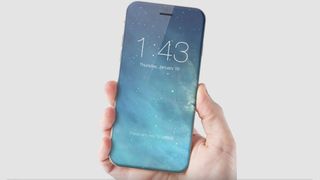
A lot of the early rumours about next year's handsets have focused around curved displays, curved backs and bezel-free displays: there's even talk that Apple and Samsung will make their 2017 flagships with full-glass fronts, putting software buttons and even fingerprint readers underneath the screen so everything looks uniform.

Oh and Siri, Google Assistant and other AI apps such as Cortana should all get another big upgrade in 2017 - these personalised digital assistants are becoming more and more important on phones and other devices, especially now phone hardware has hit something of a plateau.

A tablet or two

Tablets aren't quite the headline-grabbing gadgets they used to be but there's still enough interest in them for tech firms to want to refresh their line-ups during 2017. We're talking primarily about Apple and Samsung here, though it would be good to see a few more companies get serious again about this larger form factor.

Apple will lead the way with some new iPad Pros and iPad minis: expect announcements around March time, though that's only an educated guess. We might even see a new 10.5-inch iPad, along with 3D Touch for Apple's slates (possibly). Consumers don't upgrade their tablets as often as their phones, so don't expect major innovations in 2017.

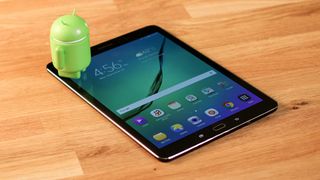
As for Android, it's really Samsung and Google fighting it out. We're hoping the excellent Samsung Galaxy Tab gets another update at some point during the next 12 months, and the Google Pixel C is also due a refresh, having originally appeared in September 2015. We're hoping to see one anyway, because the iPad could use some healthy Android competition in the tablet market. A lot of the big names in tech have shifted to 2-in-1 devices now - tablets that turn into laptops or vice versa - which brings us neatly to...

Laptops and desktops

You could be forgiven for being a little underwhelmed by Apple's MacBook Pro refresh at the end of 2016, but the Cupertino company may well give its premium, Touch Bar-enabled notebooks a specs refresh when Intel's new Kaby Lake CPUs are ready to reach the mainstream.

Who knows? We might even get some new Mac Minis, Mac Pros and iMacs as well during the course of 2017, because Apple CEO Tim Cook has promised that "great desktops" are on the roadmap for his company.

2016 was a big year for Microsoft of course, with an updated Surface Book and a brand new Surface Studio unveiled to the world. We wouldn't be at all surprised if Microsoft decided to refresh both its laptop and all-in-one desktop near the end of 2017, with another set of improved hardware specs on board.

The Surface Pro 4 is now more than a year old as well, and there's a lot of talk that the tablet-laptop hybrid is in line for a refresh in the early part of 2017 - possibly around March, when Apple could be planning to show off new iPads.

And what of Google? Look out for better specced and better value Chromebooks through the course of the year - with maybe another premium Pixel Chromebook added to the mix too. 2017 might also be the year we see the merging of Chrome OS and Android, something rumoured to be under the codename Andromeda.

We won't go into a detailed analysis of what Samsung, Asus, Acer, HP, Dell and the rest are planning for 2017 here, but stand by for another avalanche of laptops and 2-in-1s at every price point, many carrying the aforementioned Kaby Lake CPUs from Intel. The key tech expos to watch out for are the neatly acronymed CES (January), MWC (end of February) and IFA (September).

Gaming and consoles

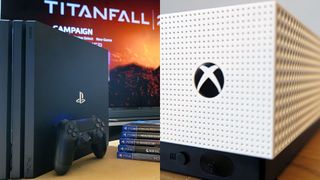
We were treated to the PS4 Pro and the Xbox One S in 2016 but there's more in store for 2017 - Microsoft has teased details of Project Scorpio, its next-gen console, which is slated to be launched before 2018 arrives. It's apparently packing 6 teraflops of power and will even out-muscle the PS4 Pro in terms of raw performance. Meanwhile the PlayStation 5 looks an unlikely bet as far as the next 12 months are concerned.

Outside of the big two we're getting the intriguing-looking Nintendo Switch in March - can Nintendo carve out a Wii-style niche in the market before Sony and Microsoft launch their next major console iterations? We'll know more in January when Nintendo has promised to share more details about the machine, and it's a good bet me might see a few more retro consoles like the NES Classic Mini make an appearance - from Nintendo and others.

The big event of the year will once again be E3 in June and there are a host of titles coming down the line to get gamers excited, from Shenmue 3 to Red Dead Redemption 2. Covering them all would take an article all of its own, so check out our 2017 games preview for more on the top titles of next year.

Wearables bouncing back

2016 was a relatively quiet year for wearables, but they're not going away, and should be back and better than ever in 2017. Picking out individual gadgets you can expect is difficult, as there will be a whole host of them, but one of the strongest rumours around at the turn of the year is that Google will release two smartwatches of its own to welcome the arrival of Android Wear 2.0.

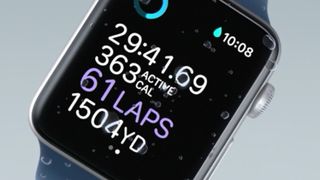
As for Apple, it waited a year and a half before updating the original Apple Watch, and we suspect it may wait as long again before releasing a Series 3 incarnation - the Series 2 only just arrived in September and there just isn't the consumer demand to justify a new model every year. We may well see a significant software update in the summer though.

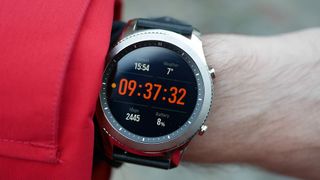
It's a similar story with Samsung: the Gear S3 appeared towards the end of the year, which means the company won't be in any rush to bring out a successor. We might see a Gear S4 show up before 2017 is out but right now we'd only say it's a possibility.

Another clutch of updated trackers from Fitbit is far more likely than a new Samsung device - the company has taken over Pebble, so look out for signs of that influence on Fitbit's hardware and software in 2017. It's hard to predict exactly what Fitbit will come out with in the next 12 months, so diverse is its range of gadgets, but we're certain that new trackers will be on the way.

And the best of the rest

The HTC Vive, Oculus Rift and PlayStation VR all went on sale in 2016, so it could be a quiet year next year for virtual reality hardware, except for some more mobile headsets. Augmented reality could help to fill the void: the Microsoft HoloLens is on sale to developers now, and chances are we'll be hearing a lot more about it in 2017.

If 2016 was the year VR arrived, 2017 could be the year it becomes affordable. We know that Microsoft has already promised that a range of virtual reality headsets from the likes of Dell, Asus and Lenovo will be turning up over the next year, and at decent prices too - around the $299 (roughly £240) mark.

Expect the usual avalanche of smart TVs too, with 4K remaining the very best standard to beat in 2016 as it was in 2017, and all the on-board software platforms getting just that little bit smarter through the course of the year. We should see a lot more Ultra HD Blu-ray devices appear on the market - and about time too - from the big names like Panasonic, Sony and Samsung.

As you can see, it's going to be a bumper year for tech fans, and we've only really scratched the surface of what's coming in 2017. Expect a lot of great gadgets and one or two surprises to turn up during the course of the year, and of course the best place to read about everything that's happening will be T3.com.


Source: T3's top tech to look out for in 2017 mega preview